
Global industrial manufacturing stands at a massive historical crossroads. For over a century, heavy production facilities, assembly lines, and industrial processing plants have relied heavily on fossil fuels, coal-fired power grids, and natural gas to keep their heavy machinery running. While this carbon-intensive energy model built the modern industrial world, it is fundamentally incompatible with a sustainable future. Climate regulations, volatile fossil fuel markets, and rising consumer demand for eco-friendly products are forcing manufacturing executives to rethink how they power their operations.
Integrating renewable energy into future production facilities is no longer just a corporate social responsibility initiative or a public relations strategy. It has become a core operational imperative for long-term viability and cost control. Solar, wind, geothermal, and advanced green hydrogen technologies are transitioning from alternative experiments to the primary power source for next-generation manufacturing plants.
Transitioning industrial operations to clean power requires overcoming unique technical hurdles, restructuring facility infrastructure, and rethinking how energy is stored, managed, and consumed on the factory floor.
The Industrial Energy Challenge
Heavy manufacturing is among the most energy-intensive sectors in the global economy. Steel production, chemical synthesis, automotive assembly, and semiconductor fabrication demand massive, continuous supplies of electricity and thermal energy. Historically, meeting this demand meant plugging into regional power grids heavily reliant on coal and natural gas.
The Vulnerability of Fossil Fuel Dependence
Relying on traditional energy grids exposes production facilities to extreme price volatility. Geopolitical conflicts, supply chain bottlenecks, and depleting fossil fuel reserves cause electricity and gas prices to fluctuate wildly, making long-term financial forecasting notoriously difficult for plant managers. Furthermore, tightening international carbon pricing mechanisms and regulatory penalties mean that continuing to burn fossil fuels directly erodes operational profit margins.
The Intermittency Hurdle in Industrial Settings
While renewable energy sources like solar and wind are infinitely abundant, they are inherently intermittent. The sun does not always shine, and the wind does not always blow at a constant speed. Traditional consumer grids can absorb this variability easily, but heavy manufacturing facilities often require continuous baseload power to prevent catastrophic damage to sensitive machinery or production batches. Solving this intermittency challenge is the primary engineering hurdle for future renewable-powered plants.
Microgrids and Onsite Generation Infrastructure
To overcome grid instability and intermittency, future production facilities are increasingly taking energy generation into their own hands. By deploying onsite renewable infrastructure and microgrid control systems, manufacturing plants can generate, store, and manage their own clean electricity independently.
Harnessing Onsite Solar and Wind Power
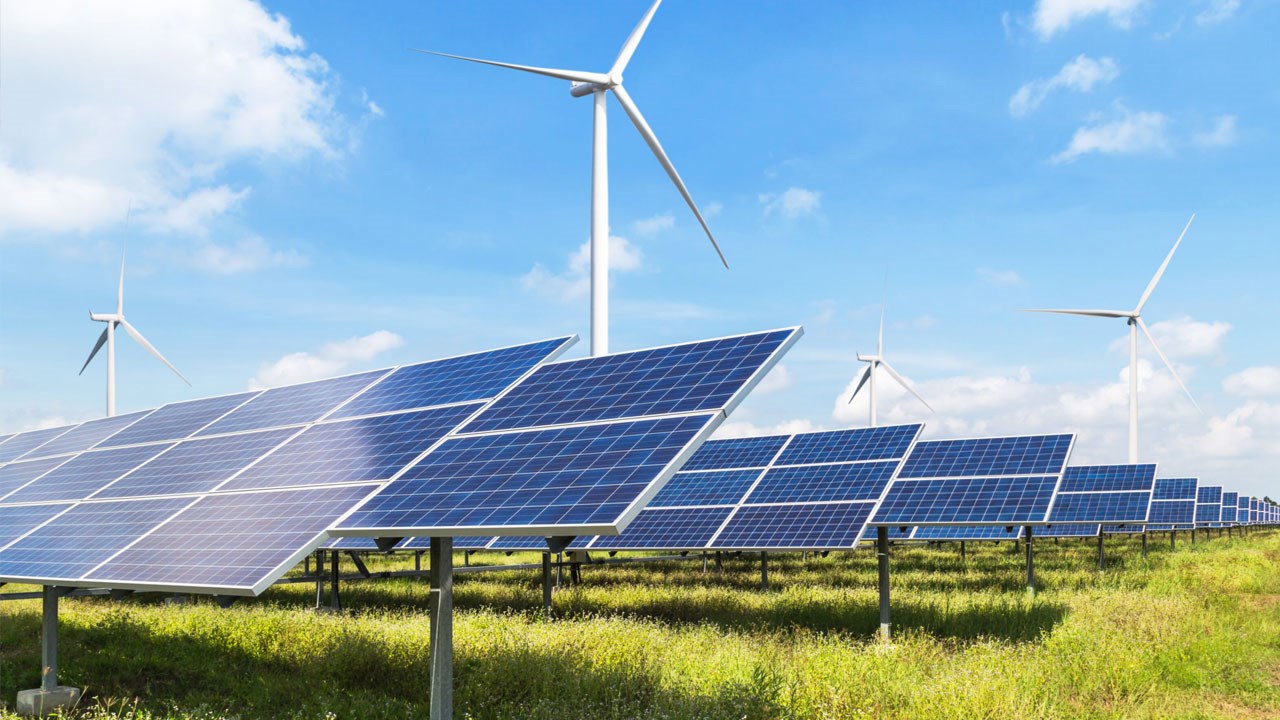
Modern factories often feature massive, flat rooftops and surrounding acreage that serve as ideal platforms for commercial solar installations. Combined with localized wind turbines where geographic conditions permit, onsite generation allows facilities to capture clean power directly at the point of consumption. This eliminates transmission losses associated with long-distance power grids and provides a predictable, low-cost energy baseline.
-
Rooftop Photovoltaics: High-efficiency solar arrays cover vast industrial roofs, supplying daytime operating power for assembly lines and lighting systems.
-
Small-Scale Wind Turbines: Vertical-axis wind turbines integrated into industrial parks capture turbulent wind patterns generated by surrounding structures.
-
Geothermal and Biomass Integration: Facilities with access to geothermal resources use deep-earth heat for industrial thermal processes, while manufacturing plants in agricultural or forestry sectors convert organic waste into clean biomass energy.
Advanced Energy Storage Solutions
Because industrial production often runs twenty-four hours a day, storing surplus daytime solar energy for nighttime operations is essential. Future facilities incorporate utility-scale battery energy storage systems, advanced flow batteries, and thermal storage technologies. These systems capture excess renewable energy during peak generation hours and discharge it smoothly when production demand peaks or generation drops.
Electrification and Industrial Thermal Processes
Generating clean electricity is only half the battle. A significant portion of industrial energy consumption is dedicated not to running electric motors, but to generating high-temperature heat required for smelting, chemical processing, drying, and treating materials. Historically, this thermal energy has been supplied by burning natural gas or coal directly inside industrial furnaces.
The Shift to Industrial Heat Pumps and Electric Boilers
Future production facilities are aggressively electrifying their thermal processes. Industrial-grade electric boilers and high-temperature heat pumps can replace fossil fuel burners, utilizing renewable electricity to generate the steam and heat required for heavy manufacturing. This complete transition eliminates onsite direct carbon emissions entirely.
-
Green Hydrogen Combustion: For ultra-high-temperature processes that are difficult to electrify directly, such as primary steel manufacturing, facilities are exploring green hydrogen produced via renewable-powered water electrolysis.
-
Induction Heating: Advanced electromagnetic induction systems deliver precise, rapid heat directly to metal components, replacing inefficient gas-fired ovens with clean, highly controllable electric alternatives.
Smart Energy Management and Artificial Intelligence
Integrating fluctuating renewable sources and complex onsite storage systems requires a level of intelligence that traditional electrical panels cannot provide. Future manufacturing plants rely on smart microgrids powered by artificial intelligence and Internet of Things sensors.
Predictive Energy Optimization
AI-driven energy management systems continuously monitor weather forecasts, historical production schedules, regional grid pricing, and real-time battery storage levels. By analyzing these data points, the system automatically optimizes when the factory draws power from the external grid, when it utilizes stored battery power, and when energy-intensive manufacturing processes should be scheduled to run at peak efficiency.
Frequently Asked Questions
How do manufacturing facilities maintain continuous power when renewable sources are intermittent?
Facilities solve intermittency by combining diverse energy sources such as solar, wind, and biomass with large-scale battery storage systems and smart microgrids. If renewable generation drops, the microgrid seamlessly balances the load by drawing from stored battery reserves or reliable regional backup power.
What is the primary financial barrier for factories transitioning to 100 percent renewable energy?
The main barrier is the high upfront capital expenditure required to install onsite solar arrays, wind turbines, heavy-duty battery storage, and modernized electrical equipment. However, these initial investments are typically offset by drastically lower long-term operating costs and protection against rising carbon taxes.
Can existing legacy factories be retrofitted with renewable energy systems?
Yes. While designing a greenfield facility specifically for renewable integration is ideal, many existing manufacturing plants successfully retrofit their roofs with solar panels, upgrade their heating systems to industrial heat pumps, and install intelligent energy management software to slash their carbon footprints.
What role does green hydrogen play in renewable manufacturing?
Green hydrogen acts as a clean chemical feedstock and an energy carrier for heavy industrial processes that require extremely high temperatures, such as steel production and chemical synthesis, which cannot be easily powered by standard electricity alone.
How do government regulations and carbon pricing accelerate this energy transition?
Stricter environmental regulations, mandatory carbon disclosure laws, and escalating carbon taxes make fossil-fuel-powered manufacturing financially unsustainable. Conversely, government subsidies and tax incentives for green energy adoption provide strong financial motivation for industrial modernization.
Does transitioning to renewable energy affect the reliability of product manufacturing?
When properly engineered with redundant storage, advanced microgrids, and reliable backup systems, renewable-powered facilities often achieve higher energy reliability than those connected to aging, failure-prone public electricity grids.